Understanding your Attachment Style to Parent your Third Culture Family
Hong Kong Family Attachment Style
Understanding your Attachment Style as a Hong Kong Expat Mum Raising Third Culture Kids
There is a moment that almost every parent I work with in Hong Kong has described to me. Their child says something, or does something, and instead of responding the way they intended, something older takes over. A reaction they did not choose. A tightness in the chest. Words that came out all wrong.
If that sounds familiar, I want you to know something: that is not a flaw in you. That is your attachment system. And once you begin to understand it, everything starts to make a little more sense.
This post is for us parents in Hong Kong, far from our own families and inside a culture of high performance and relentless productivity, this work can feel harder. It is for the mums in Hong Kong who are raising children far from their own families, carrying the invisible weight of expat life, and wondering how to break patterns they never consciously chose. And it is especially for those of you raising third culture kids, who are doing something beautifully complex and sometimes incredibly lonely. But it is also more available than we think. It begins with noticing. With getting curious rather than critical when we react in ways that surprise us.
This week, I want to invite you to sit with one question. Not to solve it. Just to hold it.
What did I need as a child that I am still waiting for someone to give me?
Let us start at the beginning.
What John Bowlby taught us about Attachment
In the 1950s, British psychiatrist John Bowlby began developing what would become one of the most important theories in developmental psychology: attachment theory.
Bowlby’s central insight was this. Human babies are not born needing only food and warmth. They are born needing connection. The bond between a child and their caregiver is not just emotionally significant. It is a biological survival system. Babies seek proximity to their caregiver because, on a deep evolutionary level, closeness means safety.
When a caregiver is reliably present, warm, and responsive, the child develops what Bowlby called a secure base. They carry an internal sense of safety that allows them to explore the world, take risks, recover from setbacks, and reach out for help when they need it. They know, in their bones, that someone is there.
When that base is unreliable, frightening, or absent, the child adapts. They find ways to manage the gap between what they need and what is available. Those adaptations become their attachment style. And they tend to travel with us, quietly, into adulthood and into parenthood.
“The propensity to make intimate emotional bonds to particular individuals is a basic component of human nature.” John Bowlby
Bowlby’s work was later expanded by psychologist Mary Ainsworth, whose research gave us the framework of attachment styles we still use today. Her famous Strange Situation studies showed us, for the first time, that children’s responses to stress and separation are not random. They are organised around the care they have received. (More to come on Ainsworth’s Strange Situation tests in the coming weeks).
Attunement: The Heart of Secure Attachment
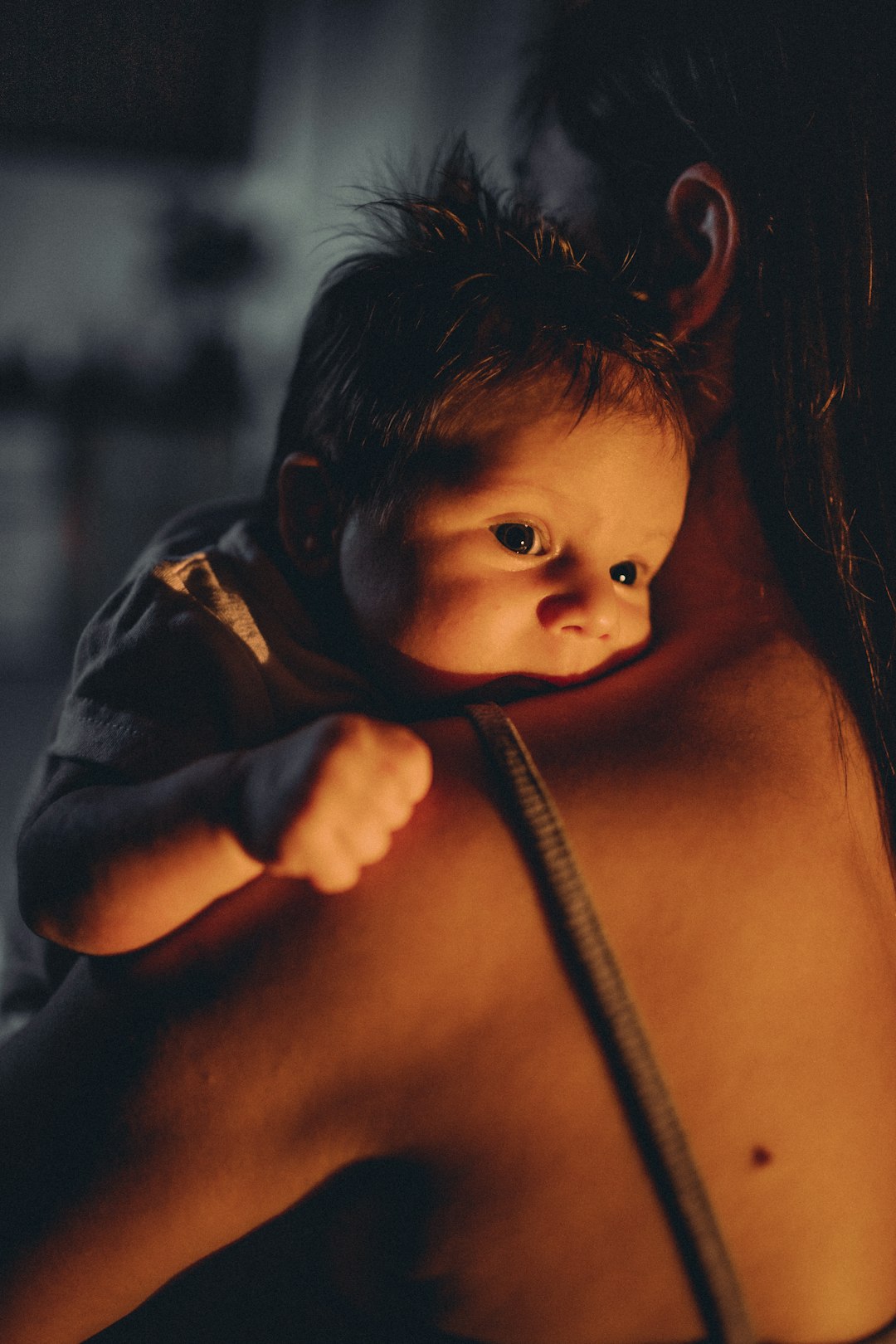
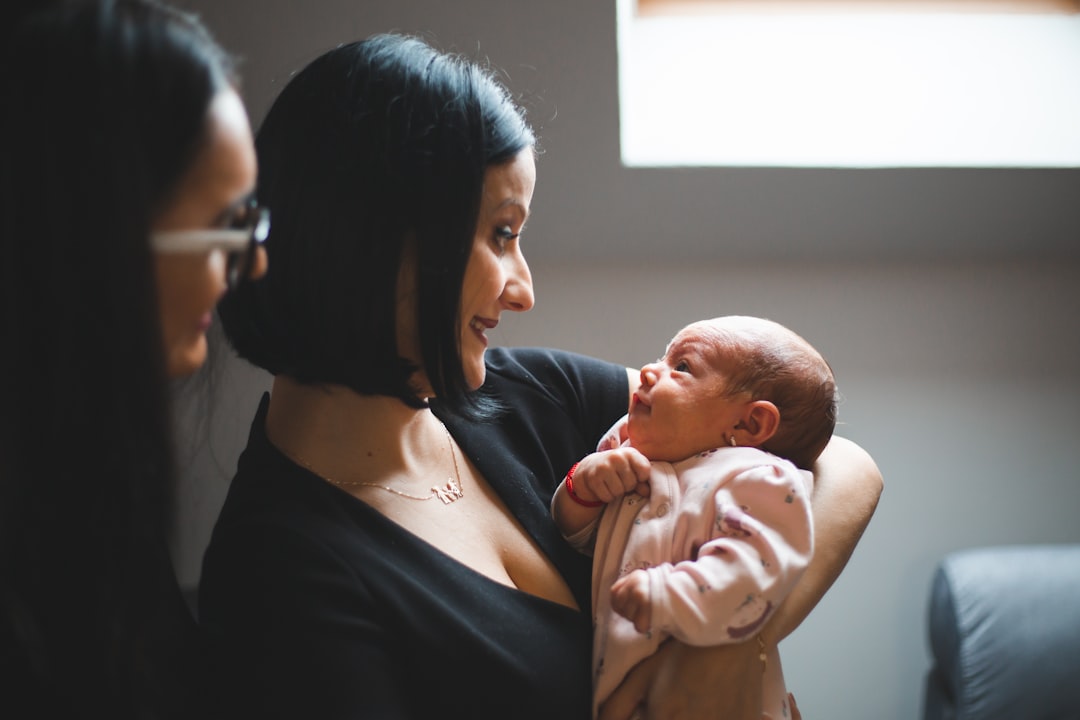
Attunement is the experience of being felt, understood and responded to.. It is what happens when a parent notices their baby’s distress, leans in, and responds in a way that says: I am here. You are safe. I am not going anywhere. It is a response to a bid for connection.
Think of it as a dance, one leads, the other follows. Usually, dance partners are in sync.
Attunement is not about getting it right every time. Research by Ed Tronick tells us that we need to be attuned to our children only 30% of the time. What matters is not constant attunement, but the pattern of connection, rupture, and repair that follows. The child learns, over and over, that the relationship can hold difficulty and come back to warmth.
In neuroscience, this shows up as limbic resonance. When two people are emotionally connected, the same parts of the brain activate in both of them simultaneously. We are literally wired to feel together. And it is through being felt with, repeatedly, that a child learns that their emotional world is safe and manageable.
Attunement is built through presence and awareness.
The Four Attachment Styles
I want to offer these gently, as maps rather than labels. They are not boxes. They are ways of understanding the strategies we developed, as children, to stay close to the people we needed most.
Secure Attachment
People with a secure attachment style grew up with caregivers who were generally available, responsive, and warm. As adults, they tend to feel worthy of love, trust others reasonably, and reach for connection when they are struggling. They can tolerate closeness without losing themselves, and distance without feeling abandoned. This is the pattern we are hoping to offer our children.
Anxious Attachment
An anxious attachment style develops when care was loving but inconsistent. Sometimes the caregiver was fully present, and sometimes not. The child learns to stay hypervigilant, scanning for signs of disconnection and working hard to keep the caregiver close. As adults and parents, this can look like worry, over-involvement, or a deep hunger for reassurance that never quite feels like enough.
Avoidant Attachment
An avoidant style tends to develop when emotional needs were consistently minimised or ignored. The child learns, early, that needing is not safe. They become self-sufficient as a protective strategy. As adults, this can make intimacy uncomfortable, and emotional conversations feel exposing. In parenting, it can make it genuinely hard to stay present when a child is crying or falling apart.
Disorganised Attachment
This pattern is the most complex, and often the least talked about. It tends to develop when the caregiver was also the source of fear or overwhelming unpredictability. The child is caught in an impossible bind: the person they need for safety is also the person they are frightened of. In adult life, this can show up as contradictory relational patterns, both desperately wanting closeness and finding it terrifying.
For the securely attached among us, it is wonderful and reassuring. However, for many of us reading this, we often exhibit more than one attachment style. We are layered and shaped by many relationships across our lives. The point is not to diagnose yourself. The point is to begin noticing, with curiosity rather than judgment, where your patterns come from and how they show up in your parenting today.
A word on Co-Regulation
Children cannot regulate their emotions on their own. They just haven’t developed the neural pathways yet. Human regulatory systems are built through being co-regulated by a calm adult, over and over again.
When we can stay steady during our child’s storm, breathing quietly, speaking gently, not escalating, we literally lend them our nervous system. Over time, they build their own. This is co-regulation, and it is one of the most beautiful mechanisms in all of developmental science.
But here is the part that matters most for this conversation: we cannot offer a regulated, steady presence if our own nervous system is running on empty. This is an invitation. Tending to yourself is not separate from tending to your child. It is the very same work. Tending to your needs allows you to nurture your child’s needs with confidence and grace.
Why Reflecting on your Attachment Style changes everything...
If you have speed read this blog no worries. However, if there is one section you should read in slo-mo, this section is it.
Our attachment patterns are not our destiny. They are our history.
Attachment researchers use the term earned security to describe what happens when adults who did not experience secure attachment in childhood develop it over time. Through therapy, reflection, honest and safe relationships, and through the slow and courageous work of making sense of our own stories, we can genuinely shift the patterns we carry.
In my work with families in Hong Kong, I see this time and again. Parents who grew up without secure attachment, who are determined not to pass that forward, and who are doing the quiet, unglamorous, deeply important work of changing the inheritance.
This work has the power to change the trajectory of not just our children’s lives but the lives of their children.
It is curiosity. It is being willing to notice when your child triggers something old in you, and instead of pushing through or shutting down, becoming gently interested in what that feeling is about and where it came from.
Your children do not need you to be fully healed. They need to see you beginning the process of healing. That is the inheritance worth passing forward.
Every time you pause before you react. Every time you go back and repair. Every time you say, I am sorry, I got that wrong, you are doing the work. And that work does not just change you. It changes the story your children will carry into their own adult lives.
If you are raising Third Culture Kids, this section is for you...
If you are raising children in Hong Kong, you are doing something that deserves to be named. You are parenting far from your own family, navigating international schools and cultural transitions, building community in a city that often feels like it is always moving. And many of you are raising third culture kids.
Third culture kids are building their identity in that in-between space, between their parent’s home country and the country they are living in, which is both a gift and, at times, a genuine source of grief.
Here is what the research is clear about: the most protective factor for third culture kids is not a stable school, or a consistent cultural identity, or even staying in one country long enough to grow roots. It is a secure attachment to at least one primary caregiver. We are their home base when geography keeps shifting. We are their constant.
And yet expat life can make that harder. The distance from family support. The cycle of goodbyes as friends and colleagues rotate. The loneliness that sometimes hides underneath a very busy social calendar. The pressure, particularly in a city like Hong Kong, to perform capability and hold it all together. All of that affects your nervous system, your capacity, and your presence.
Which means that if you are raising a third culture child in Hong Kong, the most attachment-sensitive, culturally thoughtful, globally-minded thing you can do is also the simplest: take care of yourself. As a foundation to building that secure base to which you and your family unit return to.
We will miss things.
We will lose patience.
You will juggle more than feels possible and feel overwhelmed...
But what matters is that we notice what we have missed
That we come back. We repair the rupture. We apologise
That we keep trying. We begin again...
That is what your children need most. And it begins, always, with you. Building a secure relationship with yourself, that you and your family keep coming home to.
Because we have relationships worth repairing and restoring... Including the one with ourselves
Warmly,
Lisel
PS: If any of this feels heavy, please contact me for a safe, confidential, non-judgmental discussion.
Related blog stories


Join our community