Tweens and Friendship: What Peer Orientation Really Means for Expat Families in Hong Kong

Hong Kong expat tween friendships
Friendships and Peer Orientation for Hong Kong tweens
Your tween is pulling toward their friends and away from you. You know this is developmentally appropriate. Yet, it tugs at the strings of your heart. Family therapist Lisel Varley explains peer orientation, why the foundation still lies at home, and the one reframe that changes everything about how we help our kids find their people in Hong Kong.
What Peer Orientation really is
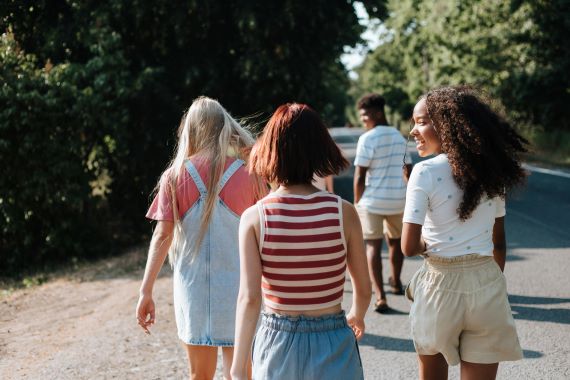
If you have a child between eight and twelve right now, you probably already know what I am about to describe.
The shift. The moment when you noticed that your opinion mattered slightly less than it used to, and their friend's opinion mattered slightly more. The moment when getting ready for a playdate produced more enthusiasm than a family outing.
If any of that feels a little tender to sit with, that is completely understandable. And it is also exactly what is supposed to be happening.
What Attachment Research says about Peer Orientation
Between the ages of eight and twelve, children go through a significant developmental shift. They begin to look outward. Beyond the family and toward the wider world. Toward peers, friendships, belonging outside of home.
This is called peer orientation. It is healthy. It is developmentally normal. And it is the beginning of something that will shape the way your child moves through the world for the rest of their life.
In the tween years, children are rehearsing who they are in the presence of other people. They are figuring out how they come across, what they value, what kind of friend they want to be.
They are practising being a person, and they are doing it in the safest laboratory, their safe haven available to them: their peer group, while being firmly and securely attached to you, their secure base.
Why Peer Orientation is especially challenging in Hong Kong
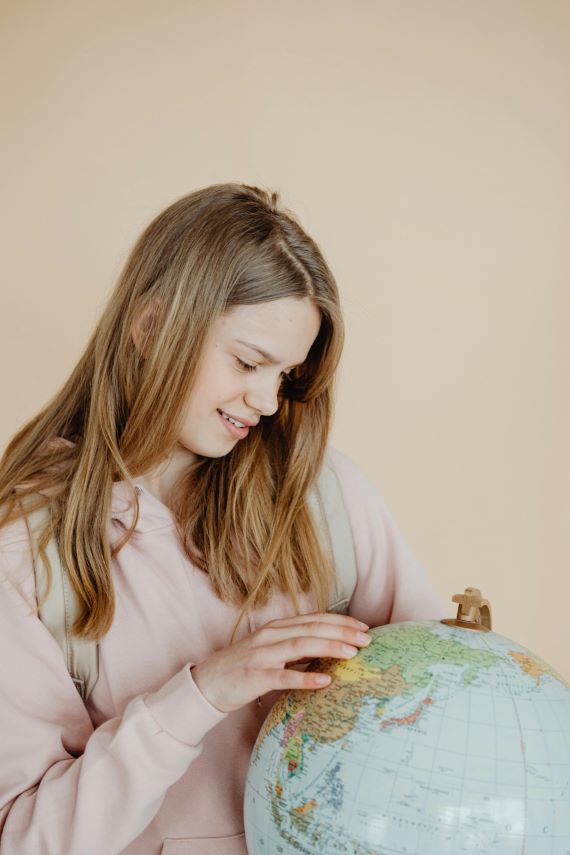
In most cities, this developmental journey is demanding enough. In Hong Kong, it comes with an extra layer.
We live in a city where the community shifts constantly. Families arrive. Families leave. The friend your child walked to school with in September might not be here by January. The tight little group they spent two years building can unravel quickly, within weeks.
For tweens in Hong Kong, the pressure to find their people is real, and it sits on top of a landscape that does not always stay still long enough for friendships to develop sufficient depth.
The dual challenge: Hard for them, Hard for us too
When I talk to parents about this stage, there is almost always a triple-layered conversation happening.
There is the conversation about their child, the worry, the questions about whether the friendships are going well, whether their child is happy, whether they are finding their place, while maintaining their individuality.
Beneath that, there is usually something quieter. The letting go. The moment when you realise your child is leaning a little less toward you and a little more toward the world. And how much that can catch you by surprise, even when you know it is coming.
A bit further below that iceberg is the added nuance of their own adult friendships forged over similar experiences being new, away from ‘home’, being the village for each other and the transient nature of such expat friendships.
All of those experiences are real. Both deserve care. If you find yourself reading this with a mix of parenting concern and something more private, you are not alone, and you are not being dramatic. Watching your child grow away from you, even in the healthy, ordinary way, is one of the more quietly significant things a parent goes through.
Why the foundation still lies at Home
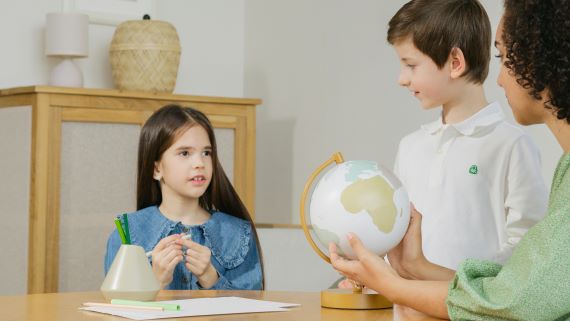
Here is the thing that I comeback to time and again in my work with families, because it is both counterintuitive and deeply reassuring.
The most confidently social children are not the ones who were pushed toward independence early. They are the ones who are most certain of their home base.
A child who feels securely held at home is a braver explorer out in the world.
When children know, really know in their bones, that there is somewhere safe to land, they can take risks. They can try new things and walk into difficult social situations and bounce back from the inevitable heartache of friendship. Because the landing place is secure.
Peer orientation is healthy. But it does not mean our role gets smaller. Our role just takes a new form. We move from being at the centre of their world to being its anchor. And the steadiness of that anchor is everything.
The one Reframe that changes how you view things
Most of the time, when a tween is struggling with friendships, the anxiety they are carrying is some version of this: I need to fit in. I need to be like them. I need to find the group and figure out how to belong to it.
That particular project is exhausting, because it asks children to shrink themselves to fit a shape that is not quite theirs.
Here is what I offer instead, as a parent and as a therapist.
Once you have sat with your child in the hard feelings. Once you have really heard them, validated the ache of not quite fitting, been honest about how much it hurts. There is a gift you can offer them.
Gently coach them away from the project of fitting in, and toward the much more interesting and sustainable project of finding people who actually get them.
Ask them:
What lights them up.
What they talk about that makes time disappear.
Who seems genuinely curious about them rather than just tolerant of them.
Where their people might be, the art class, the swim team, the drama club, the corner of the library where the readers go.
Shared interests build real friendships. And real friendships, even one or two of them, are worth infinitely more than being adjacent to a group that never quite fits.
A note on expat friendships in Hong Kong
One more thing, specifically for expat families in Hong Kong.
The transient nature of relationships here can make this feel harder than it might elsewhere. And you might find yourself grieving the friendships your child has to leave behind, or watching them hold back a little on new ones because they have already learned that people leave.
That is a real response to a real situation. It is worth naming with your child, gently and honestly. Not to solve it, but to acknowledge it. Sometimes the most helpful thing we can say is: I know this city makes friendships feel more uncertain. That is hard and it makes sense that it is hard.
You are not raising them to be immune to loss. You are raising them to be brave enough to keep loving anyway.
If your tween is navigating the social world of Hong Kong and you would love some support, I am here. Warm, confidential, non-judgmental, and always glad to talk.
lisel@ourflourishingfamilies.com | www.ourflourishingfamilies.com
Related blog stories

Join our community