What ADHD Really Looks Like Inside a Hong Kong Family: No it is not a Personality Flaw
ADHD Autism Hong Kong Kids
This blog is specifically written on World Mental Health Day, which also coincides with ADHD Awareness Month. With this year's theme "Lived Experiences Shared", this blog shares a narrative of a Hong Kong family's journey upon receiving their son's diagnosis. It is a journey of sharing, listening, feeling understood to acceptance, empowerment and strength.
The typical narrative kids with ADHD hear
October is ADHD Awareness Month. And today is World Mental Health Day.
Before we go any further, I want to dispel one myth upfront.
ADHD (or AuDHD) is not a personality flaw. It is not laziness with a neurological label to make excuses for. Nor is it a result of poor, gentle or permissive parenting. It most definitely is not a verdict on who your child is or who they are going to become. It is a different kind of brain. And the world, up to now, was not built for them. The label might offer some answers, allow for some targeted interventions, and direct you to the right support to guide our children to thrive in a world by being unapologetically themselves.
Gabor Maté's Scattered Minds is the book I find myself returning to time and again in my practice. It is the most compassionate, honest, and clinically rigorous account of ADHD I have encountered. Maté writes from his own experience of ADHD, from decades of practice, and from a deep understanding of the relationship between early attachment and neurodevelopment.
Children with ADHD are often described, before they are diagnosed, with a focus on everything they struggle with.
- They cannot concentrate.
- They don’t follow instructions.
- They lose things.
- They are disruptive.
Our children hear it. They absorb it. They begin to wonder whether they are just problematic. Our differently wired kids receive far more negative feedback than positive feedback.
What gets missed in that version of the story is what Maté describes so vividly: the extraordinary sensitivity, the creativity, the capacity for deep interest and genuine passion, the lateral thinking, the empathy, the aliveness to the world when their unique and innate interests are nurtured. These qualities are part of the same wiring. The scattered mind that cannot sit still through a lesson he finds meaningless will hyperfocus for hours on something she finds genuinely compelling.
Our differently wired children do not need to change. What needs to be modified first is the environment to accommodate their unique needs. What really needs to change is our view of them. A deep sense of acceptance for who they are. Qualities and traits to be nurtured. Strengths and gifts to be harnessed in a way that allows them to achieve mastery of what is of significance to them.
A family I worked with

Today’s post is inspired by what culminated after weeks and months of gridlock, defensiveness, labelling, shame, tears, frustrations and more. I think it speaks to something many of you will recognise, though the nuances might differ.
The parents are both high achievers in the classical sense of the Hong Kong demographic. Investment banking. Senior legal counsel. Both educated at leading boarding schools in the UK, where excellence across various domains was the baseline expectation. They are warm, loving, thoughtful parents, highly actualised individuals and aligned in their values as a couple and as a family. They came to me because they were at a loss.
Their son had been diagnosed with AuDHD. Autism and ADHD together, which is more common than we realise. “There were signs all along,” they said. Social and emotional challenges, struggles to cope with certain environments, atypical emotional outbursts at home on any given day. His refusal to attend certain ECAs which he once enjoyed — martial arts, guitar, and rugby — was the start. But then came the school refusal. What started as a week off school before the Winter break turned into a series of terms.
They had tried everything. Paediatricians, school counsellors, clinical psychologists and psychiatrists. They had adjusted his schedule, his diet, his routine. They had read the books and attended the talks. Yet the mornings were a battleground, and the relationship between father and son was becoming more strained each day.
The father had been a rugby player since school. A first-team athlete through school and university, still coaching the team his son was reluctantly part of. Sport had been a significant part of his identity — it had given him discipline, belonging, a tangible skill he could contribute to wherever life took him. He wanted that for his son. Desperately. And his son was miserable each time he was on the rugby field.
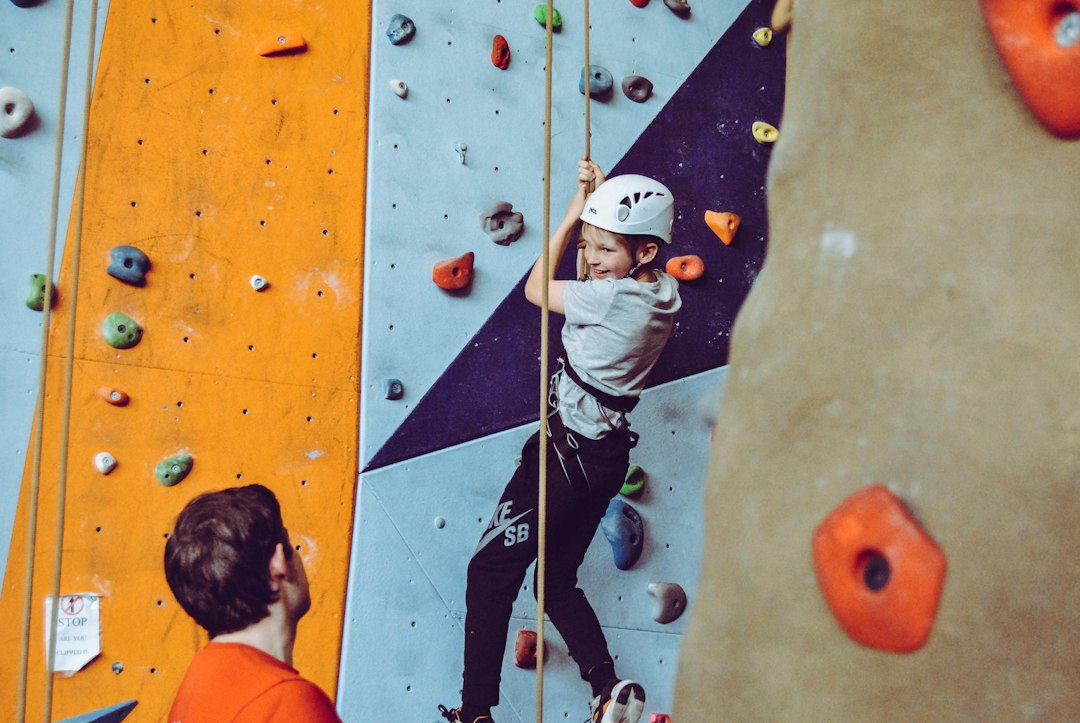
The son’s passion was rock climbing.
Which is, if you think about it, a perfect match given his diagnosis. The focus it demands is not the sustained, passive type required in a classroom. It is alive, responsive, and physically and mentally all-encompassing. The problem-solving happens in real time. The body and mind are completely in sync.
His parents had not yet grasped it for what it was. A genuine pursuit that could lead to excellence and mastery. An activity that allowed their son to come alive. The kind of purpose that could give a child like him what rugby had given his father.
The three steps we worked on together
What neurodivergent-affirming parenting actually means
Neurodivergent-affirming parenting is not permissive parenting. The diagnosis is not an excuse to have no asks of a child who is wired differently. All kids need rules, structure, routines, and boundaries. Neurodivergent kids — especially so. Boundaries held with warmth, compassion and empathy, in a consistent manner, offer them a sense of security — that sense of being shepherded by someone who really is in charge.
It invites us adults to meet our children with curiosity, not judgment. It means building the environment around their needs rather than forcing them to conform to an environment that was not designed for them. Most of all, it adopts a relationship-focused approach to allow our children to have faith in themselves in mastering their world, because of the trust and safety they feel in our support of them.
The approach we took required nothing of the child. This might surprise you. The goal was not behaviour modification. It was an attachment-focused approach that required much of the parents. Understanding. Acceptance. Attachment. Repair.
The three steps we worked through, intentionally, one steady step at a time
Step 01 — Connect. Join his world.
Before anything else can work, a differently wired child needs to feel that the adults in their life are genuinely curious about who they really are — not the version that was imagined, hoped for, or quietly grieved when the diagnosis arrived.
For this family, that meant the father stepping into his son’s world rather than continuing to invite his son into his world of rugby. He began rock climbing with his son. What started as a once-off afternoon at Stanley Ho during the summer holidays has since become a weekly dad-son ritual.
It required something significant from this dad — not just an acceptance of his son’s lack of interest in rugby, the sport that had shaped his own identity since school. It required him to take on an entirely different role: the beginner on the wall. A man who had been a team captain and a coach, taking instruction from a twelve-year-old who knew the ropes better than he did. It was uncomfortable at first.
But something shifted. His son started talking on the way home. First about climbing. Then about other things. The car rides that had been silent and tense became a journey of discovery.
Step 02 — Set limits with warmth, without losing connection.
Neurodivergent children need structure even more than neurotypical children do. The world feels unpredictable and overwhelming. Their big, uncontrollable emotional outbursts and moods can be scary, even to them. Predictable routines, structure, warm empathic limits are a few of the ways that convey to their nervous system that they are safe.
We worked on what this looked like practically. Clear expectations, explained in advance. Consequences that were logical and consistent, not reactive and irrational. Warmth and connection maintained even when the limit was held firmly. The message behind every boundary: “I am in charge, and that means you are safe.”
This was particularly important for school mornings, which had become the flashpoint. We worked on the sequence of the morning, the cues that helped rather than escalated, and the language that communicated confidence rather than desperation. Structure is not the opposite of connection. Delivered well, it is one of the deepest forms of connection.
Step 03 — Notice. Affirm. Reinforce what is right.
This is the step most often skipped, because when things are hard we notice what is going wrong. It takes a deliberate effort to notice what is going right.
Every time the child navigated a transition that had previously been a battleground, they recognised it. Each time he followed a routine proactively, they acknowledged it specifically and warmly. Not a performance of praise. Just subtle, genuine noticing. “I saw you get your bag ready without being asked this morning. That is responsible of you.”
Alongside the practical affirmations, the words of acceptance that have nothing to do with performance at all. “We love you for you.” “We love and accept you exactly as you are.” And in the hardest moments, in the middle of the meltdowns that still came: “We are right here. No matter what.”
The parents believed it. Of course they did, even below all the expectations. But the child needed to hear it said out loud and plainly — especially when their nervous system has been in fight mode for so long that love and acceptance had begun to feel conditional on compliance.
ADHD Awareness Month meets World Mental Health Day
The school refusal did not disappear overnight. The mornings still require a lot of effort. But the relationship is different. There is warmth where there once was distance. There is curiosity where there once was fear. And the boy who was struggling to fit a system is beginning to find ways to respond to the environment, with the hope that he can flourish.
That is the work. Slow, ordinary, and quietly extraordinary.
The green flags post on my Instagram captures many of the small, daily moments that signal a child is beginning to feel safe and seen again. Find it at @ourflourishingfamilies.
This month is for the parents sitting in the psychologist’s office, hearing the diagnosis feeling equal parts relieved (“we can finally explain it”) and devastated, for the dreams they dreamed for their treasures.
It is for the children who have been told in many small ways that there is something wrong with them and have begun accepting that as truth. When in reality, what needs to be modified most is the environment for them to thrive in.
The theme of this year’s World Mental Health Day is “lived experiences”. For this family, telling their story, sharing their hopes, making sense of their grief, and moving towards acceptance was exactly that. A space to feel heard, listened to, and mostly understood.
Next week I will be writing specifically about the routines and environmental factors that can make the biggest difference for neurodivergent children at home. Sign up at ourflourishingfamilies.com/substack so you do not miss it.
With so much love,
Lisel 🌸
Related blog stories


Join our community